What To Read This Weekend
Whether you're looking for something short and light or thought-provoking, here's a list of five recommendations to help you avoid doomscrolling.

A interesting read with Anthropic’s CEO
“We don’t know if the models are conscious,” says Amodei. In a broad interview, Anthropic’s CEO Dario Amodei talks about AI’s future in accelerating scientific progress, the potential to positively impact democracy and enhance individual liberties. Plus more the potential for AI to go rogue.
It’s an excellent interview where NYT journalist Ross Douthat doesn’t go easy on Amodei. This is journalism — profoundly interesting and disturbing. I encourage you to read it in its’ entirety.
Podcast & Interview: ‘Anthropic’s Chief on A.I.: ‘We Don’t Know if the Models Are Conscious’’ is in The New York Times.

Light literature that calms
“The coke factory represented for me, with overwhelming force, an embrace of darkness and shadows. Everything I could see around me when I was there was blacker than the night, until suddenly, coming around the corner, there would be a raging ball of fire and smoke, flickering shadows everywhere, and then, a few moments later, a thick, expanding mass of steam levitating into the sky in a convoluted, glowing mushroom shape.”

With no shortage of news that upsets in the daily landscape, I found refuge in pieces like ‘The Coke Factory’ that read like well-written moving meditations. Pieces like these are akin to Transcendentalist works I’ve long loved — pieces that make you stop, pay attention to what’s happening around you, and be present in the moment.
Short excerpt: ‘The Coke Factory’ by Turner Brooks is in The Paris Review.
A succinct and humourous commentary on European luxury
Once upon a time, the church sold indulgences to shorten purgatory. While America exports F-35s and Korea exports K-Pop, Europe exports self-worth, aspirations of a European lifestyle — one largely imagined by wealthy foreigners.
This is a comical take on the European luxury houses and their ability to prop the European economy and ideas of aspiration.

Article: ‘Luxury goods are Europe’s global tax on vanity’ is in The Economist.
A thought-provoking book on the intersection of society and culture and beauty
In a phenomenal book, NPR’s Hu explores the Korean beauty industry with a fresh pair of American eyes. Hu points out the prominence of these industries (culture, beauty, plastic surgery) were not accidents, but nurtured by the state.
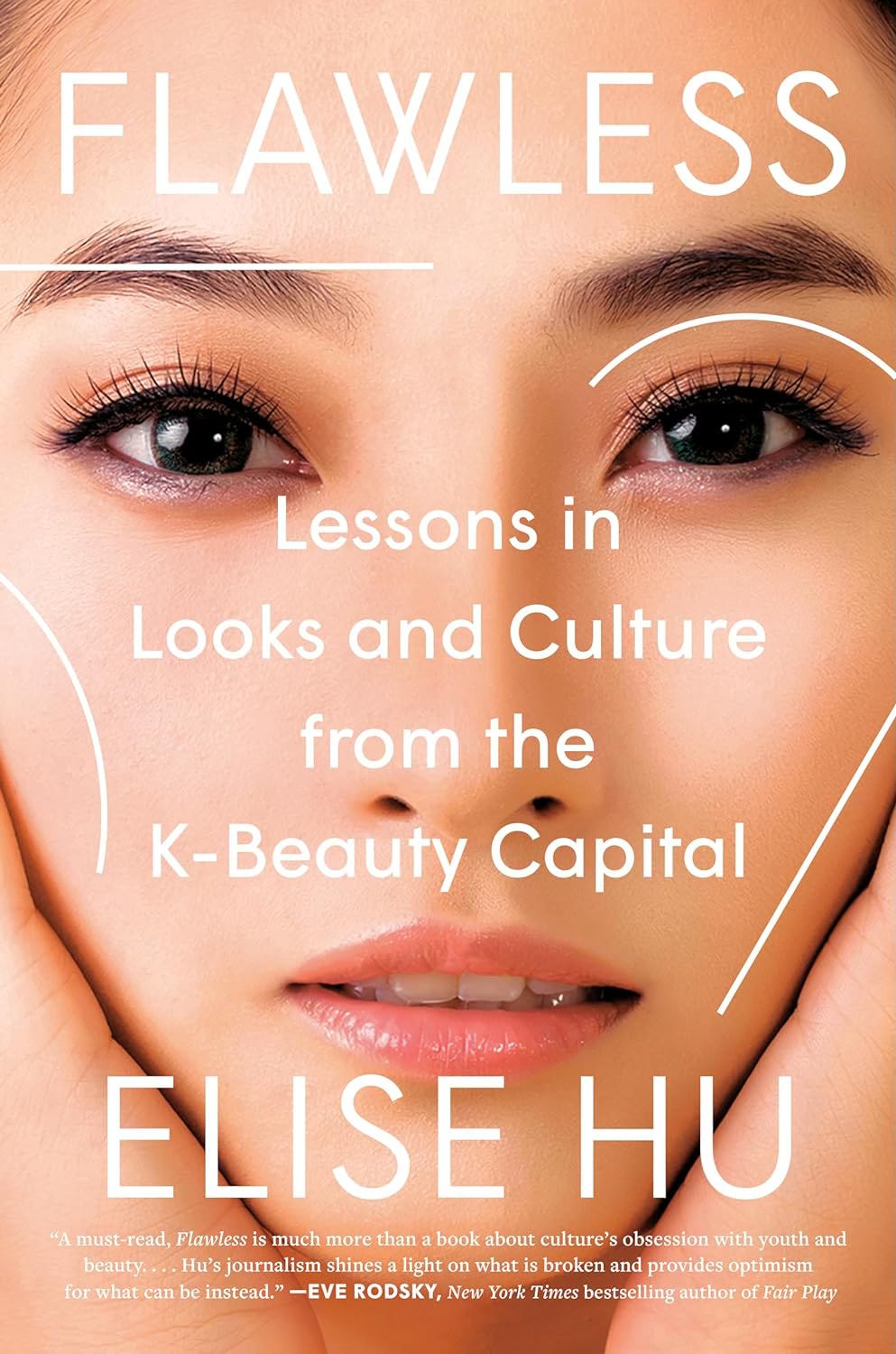
In Korea, there was already an abundance of cosmetic surgery and minimally invasive procedures 15 years ago. These practices have now become commonplace locally. This book made me ponder about our own beauty standards, how our culture is already changing as a result of social media’s emphasis on the visual, and it made me question my own fraught relationship with self-optimisation.
Hu publishes an easy-to-read book on an appearance obsessed society and that will make you reexamine your own relationship to aesthetics, self-improvement, and empowerment.
Book: Flawless by Elise Hu is available online on Bol, Bruna, and Amazon.
A short piece on why nudge policies failed
A new book argues nudge policies (a key foundation of behaviroural economics) have been ineffective as they too heavily emphasise personal responsibility. Writing a book review in The Atlantic, Rob Wolfe adds individual demonstrations of new social norms are not enough to change the world — rather, collective action and policies are.
As someone interested in, but not fluent in behavioural economics, this piqued my interest. It once again emphasised that social sciences don’t work in a vacuum, rather they are profoundly shaped by political and economic forces and discourses of their time. Behavioural economics here being influenced by trends of optimism, self-optimisation culture, and a shifting responsibility from governments and multinational corporates to individuals. This piece gave me an ‘aha’ moment.
Book review: ‘Why Nudge Policies Failed’ by Rob Wolfe is in The Atlantic.